
Leftover Roast Chicken Pot Pie
There is something especially comforting about a homemade chicken pot pie. With its flaky golden crust and warm, creamy filling, it is the kind of meal that makes an ordinary evening feel a little more special.
KimB
7/19/20263 min read
A Traditional Way to Stretch Leftovers
Homemakers have long found creative ways to serve leftovers without making the family feel as though they were eating the same meal twice.
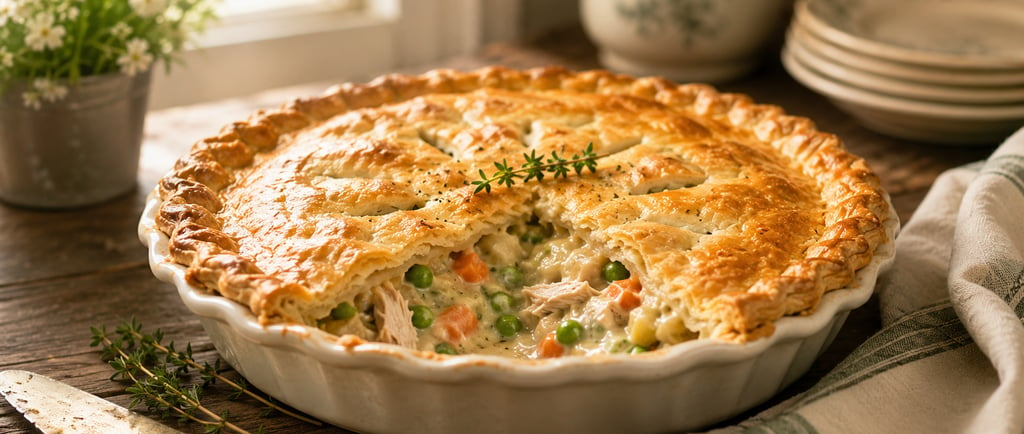
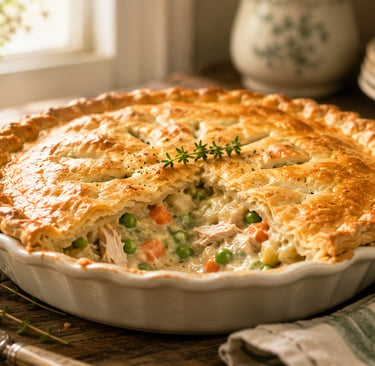
Chicken pot pie is a perfect example. A few cups of cooked chicken are combined with onion, celery, peas, carrots, and a creamy homemade sauce. Everything is tucked beneath a pie crust and baked until the filling is bubbling and the top is beautifully browned.
The finished dish feels hearty and generous, even though it began with ingredients already waiting in the refrigerator.
Why You’ll Love This Recipe
This chicken pot pie is warm, filling, and easy to adapt to what you already have on hand.
You can use leftover roast chicken, baked chicken, or a store-bought rotisserie chicken. Frozen peas and carrots save preparation time, while a ready-made pie crust makes this an approachable meal for a busy day.
Leftover gravy can also replace some or all of the broth, giving the filling an even richer flavor.
Helpful Kitchen Tips
Make sure to cook the flour with the butter and vegetables for a minute or two before adding the liquid. This removes the raw flour taste and helps create a smooth sauce.
Pour the broth and milk into the skillet slowly, stirring or whisking as you go. The sauce will begin to thicken as it simmers.
Cut a few vents in the crust so steam can escape while the pie bakes. Brushing the crust with beaten egg gives it that deep golden, glossy finish.
Allow the finished pie to rest for five to ten minutes before slicing. This gives the creamy filling time to settle and makes the pie easier to serve.
What to Serve with Chicken Pot Pie
Chicken pot pie is a complete meal on its own, but a simple side can round out the dinner nicely.
Green beans, a fresh garden salad, roasted broccoli, or sliced tomatoes all pair well with the rich filling. Fresh fruit also makes a light and refreshing side.
For dessert, keep things simple with baked apples, fruit crisp, or a small dish of vanilla pudding.
Leftover Roast Chicken Pot Pie Recipe Card
The recipe serves six and takes approximately 15 minutes to prepare and 30 minutes to bake at 400°F.
Ingredients
3 cups cooked leftover chicken, shredded
4 tablespoons unsalted butter
1 small yellow onion, diced
2 celery stalks, diced
⅓ cup all-purpose flour
1¾ cups chicken broth, or leftover gravy combined with broth
½ cup whole milk or cream
1½ cups frozen peas and carrots
¾ teaspoon salt
¼ teaspoon black pepper
½ teaspoon dried thyme
1 pie crust sheet or biscuit dough for topping
1 large egg, beaten, for the egg wash
Instructions
Preheat the oven to 400°F.
Melt the butter in a large skillet over medium heat. Add the onion and celery and cook for about five minutes, until softened.
Sprinkle in the flour and stir constantly for one to two minutes.
Slowly whisk in the chicken broth and milk. Simmer for four to five minutes, until the sauce has thickened.
Stir in the chicken, peas and carrots, salt, pepper, and thyme. Simmer for another two to three minutes, until everything is warmed through.
Pour the filling into a nine-inch pie dish.
Place the crust over the filling. Crimp the edges, cut several vents in the top, and brush the crust with beaten egg.
Bake for approximately 30 minutes, until the crust is deep golden brown and the filling is bubbling through the vents.
Allow the pie to rest for five to ten minutes before slicing and serving.
A Simple Meal Made with Care
This recipe is a reminder that a comforting family meal does not have to be expensive or complicated. Sometimes the best dinners begin with a few leftovers, a handful of basic ingredients, and the willingness to make something good from what is already available.
That is the heart of practical homemaking—wasting less, serving well, and turning ordinary ingredients into something that feels like home.
From my kitchen to yours, happy homemaking.